Sewage Pump Basics: How It Works in Your Home
September 21, 2026
Dry Source Property Restoration


Blog
Most homeowners never think about their sewage pump until it stops working, and by then the signs are usually hard to ignore. If your home sits on a slope, has a basement bathroom, or relies on a septic system, there is a good chance a sewage pump is quietly doing one of the most important jobs in your plumbing. Understanding how does a sewage pump work can help you spot small issues before they turn into a flooded basement and a costly cleanup. As a trusted restoration company in Madison and its surrounding cities, we have seen firsthand how a failed pump can catch families completely off guard.
The good news is that these systems are not complicated once you know the basics. A little knowledge goes a long way toward protecting your home, your health, and your wallet. Below, we break down what a sewage pump does, how it operates, and what you can do to keep it running smoothly.
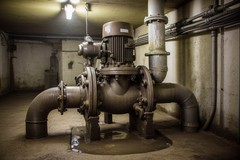
A sewage pump moves wastewater and solid waste from a lower point in your home to the main sewer line or septic tank. Gravity handles most of your home's drainage, but when a bathroom, laundry room, or floor drain sits below the level of the main sewer line, gravity cannot do the job alone. That is where the pump steps in, lifting waste upward so it can flow out of your home the way it should.
These pumps are typically installed in a sealed basin, often called a sump or sewage pit, located in a basement or crawlspace. Wastewater from your fixtures drains into this basin. Once the water reaches a certain level, the pump activates and pushes everything out. Because sewage pumps handle solids, they are built tougher than a standard sump pump and use larger discharge pipes to prevent clogs.
To really understand how does a sewage pump work, it helps to follow the flow of water from the moment it leaves your fixtures. The process is automatic, quick, and mostly invisible, which is exactly why so many homeowners forget the system exists until something goes wrong.
Here is the basic sequence that happens every time you flush a lower-level toilet or drain a basement sink:
This cycle repeats countless times without you ever noticing. The float switch and the check valve are two of the most important components, and they are also the parts most likely to cause trouble when they wear out or get stuck.
Because the pump lives out of sight, the warning signs often come through your senses before you ever see the equipment itself. Foul odors near a basement drain, gurgling sounds from your pipes, or slow-draining fixtures on lower levels can all point to a struggling pump. In some cases, you may hear the pump running constantly or cycling on and off far more often than usual.
Water pooling around the basin, or worse, backing up through a drain, is a clear emergency. Sewage backups are not just unpleasant, they carry bacteria and contaminants that pose real health risks. If you ever face this situation, it is important to avoid direct contact and call in professionals who handle biohazard cleanup safely. Knowing how does a sewage pump work makes these symptoms easier to interpret, so you can act before a minor malfunction becomes a full-blown flood.
Regular maintenance is the single best way to extend the life of your pump and avoid unexpected failures. Most manufacturers recommend inspecting the system at least once a year. During an inspection, you or a professional should check that the float switch moves freely, the check valve is holding, and the discharge line is clear of buildup. Listening to a full pump cycle can also reveal unusual noises that hint at a worn motor or impeller.
What goes down your drains matters just as much as the equipment itself. Grease, wipes labeled flushable, feminine products, and other non-degradable items are common culprits behind clogged pumps and jammed impellers. Treating your sewage pump with the same care you give the rest of your plumbing keeps solids moving and reduces strain on the motor. If your home loses power during storms, consider a battery backup or alarm system, since a pump that cannot run during heavy rain can leave you vulnerable to backups at the worst possible time.
Even a well-maintained system can fail, and when it does, the cleanup requires more than a mop and a bucket. Sewage water is classified as heavily contaminated, meaning it needs specialized extraction, disinfection, and drying to make a space safe again. Porous materials like carpet, drywall, and insulation often have to be removed because they trap bacteria that ordinary cleaning cannot reach. This is where professional restoration becomes essential rather than optional.
Our team approaches every sewage event with the same urgency and care we would want in our own homes. From water extraction to sanitizing and structural drying, the goal is to return your property to a healthy condition as quickly as possible. Whether you need water damage restoration in Madison after a backup or a full assessment of a failed system, acting fast limits the damage and the cost. We proudly serve Madison and the surrounding communities, and our experience with sewage cleanup in Cudahy and beyond means we know how to handle even the messiest situations with professionalism.
A sewage pump is one of those unsung heroes of a modern home, working silently below your feet to keep wastewater flowing where it belongs. By learning how does a sewage pump work, recognizing the early warning signs, and staying on top of routine maintenance, you put yourself in a strong position to prevent the kind of disaster that sends water and waste into your living space. Small habits, like watching what you flush and scheduling annual inspections, make a genuine difference over the life of your system.
Should the unexpected happen, remember that a sewage backup is a health hazard that deserves professional attention right away. Dry Source Property Restoration is ready to respond quickly across Madison and neighboring towns, bringing the equipment and expertise needed to clean, sanitize, and restore your home. If you have questions about your system or need help after a backup, reach out to our team for a free quote and let us help you get things back to normal.
September 21, 2026
September 17, 2026
September 15, 2026
September 9, 2026